Help teens and young adults build emotional resilience through an app that understands struggles they face and offers rich, clinically-approved content to drive engagement and achieve better mental health outcomes.
Role: UX Strategist, Content Designer
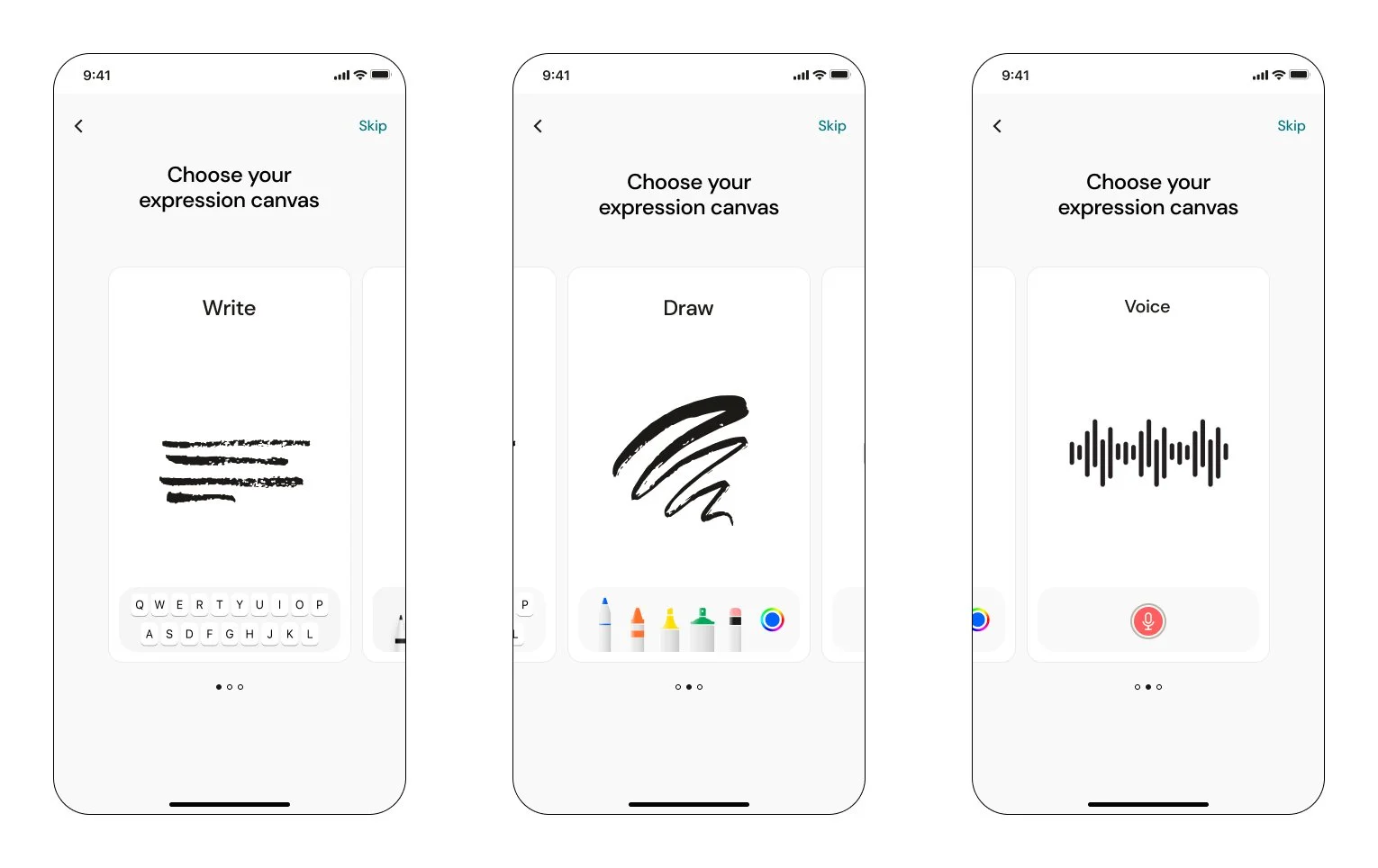
These three canvasses invite you to share feelings with Scout however feels best for you in that moment. Depending on what feelings you express, the app then tailors the content shared with you to meet your needs in that moment.
Scout can also send push notifications to remind you to share your feelings at whatever frequency and time of day makes the most sense for you: daily, twice a day, every other day, in the evening, etc.
We developed these clinically-backed lessons and content with the team at Sutter Health, in cooperation with their youth advisor group, so that these lessons would be effective and approachable.
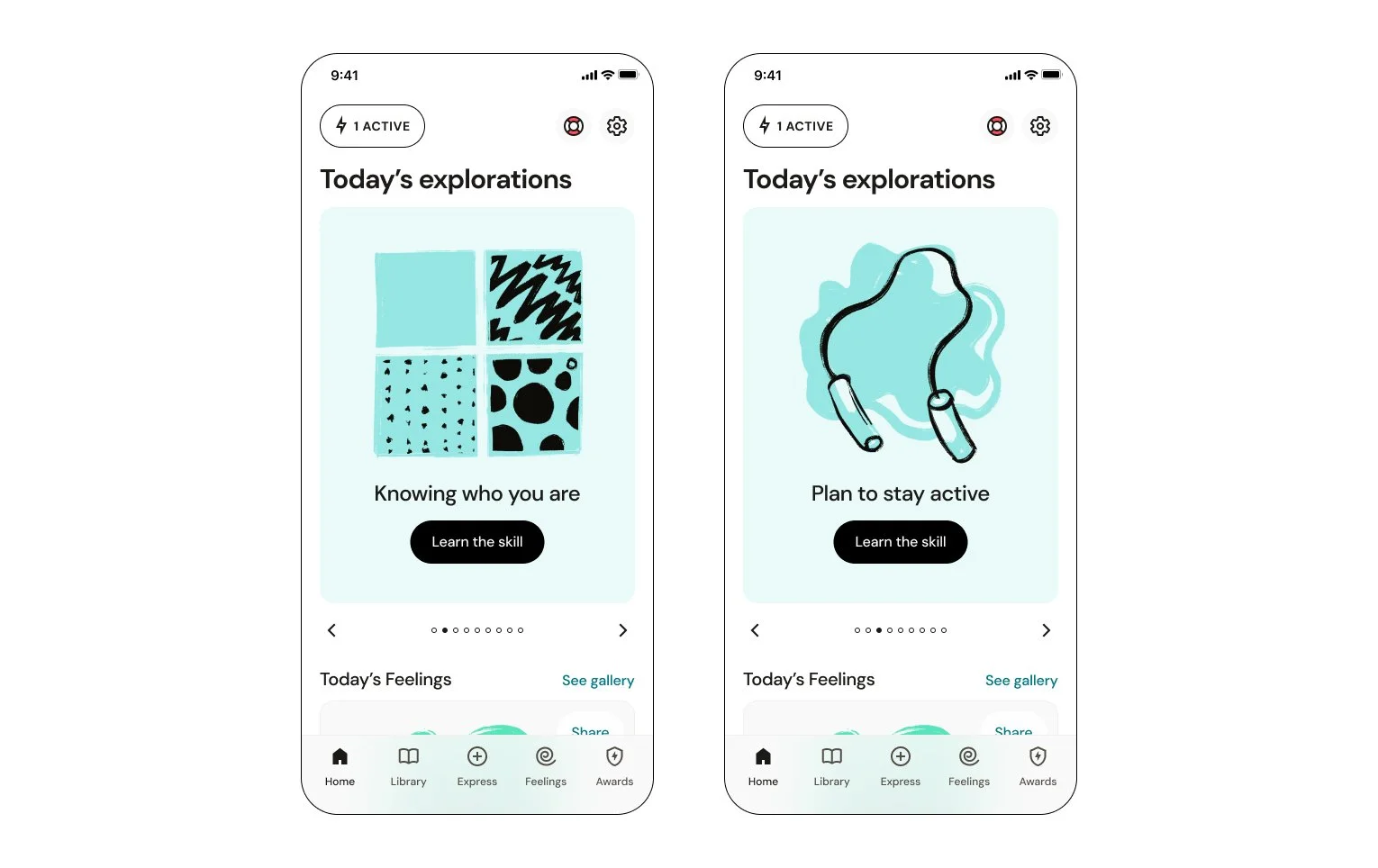
You can either use the content based on how you’re feeling in the moment, or you can follow the structured path the whole library of content is organized into.
This offers two paths: one for in-the-moment support, and the other for people motivated by reaching milestones as they complete sections over time.
Each piece of content was focused on an aspect of a Rugged Resilience Measure (RRM) principle. We created two kinds of content: lessons and activities.
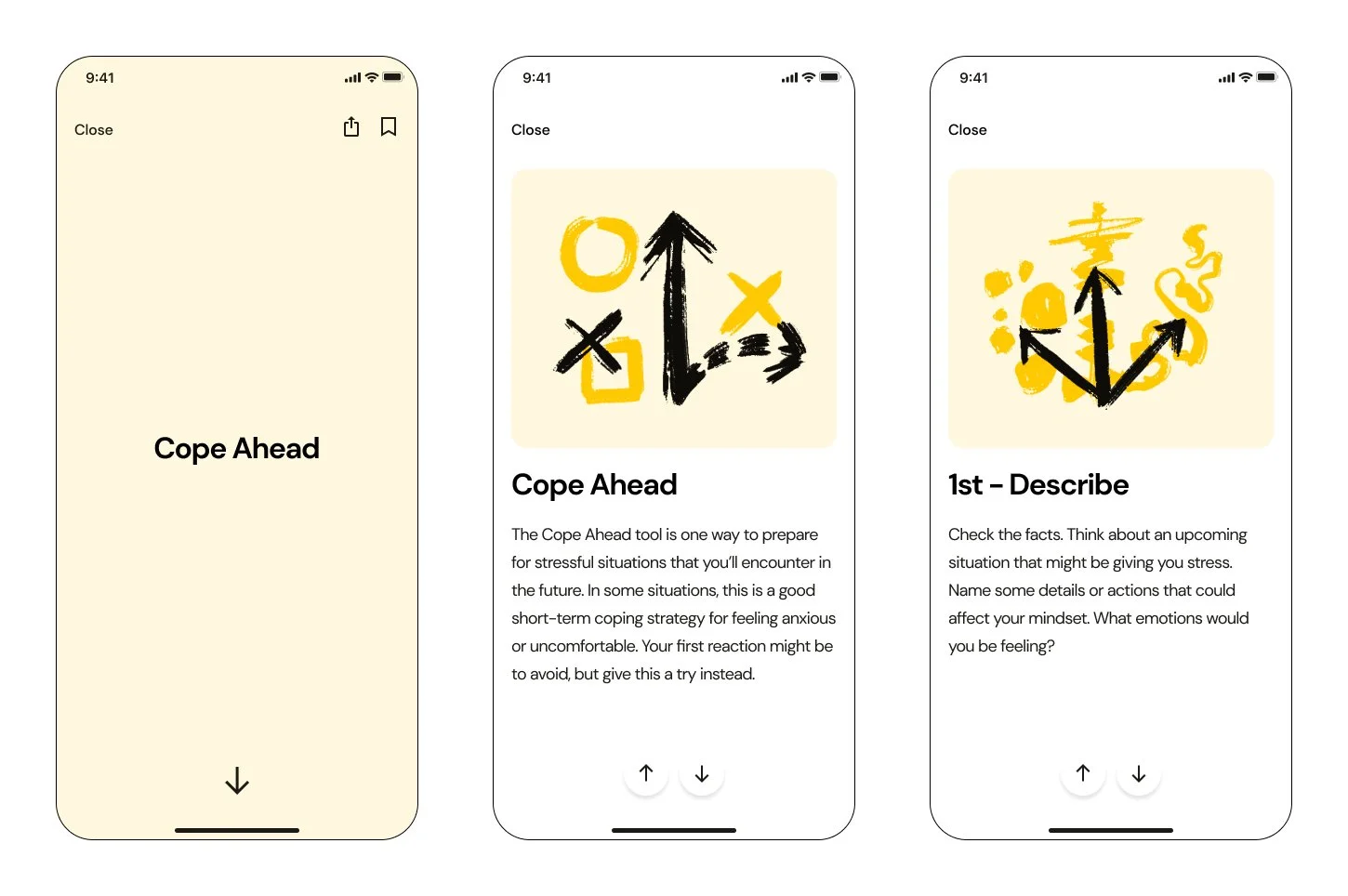
Lessons were text-based with engaging gifs and illustrations paired with bite-sized text that the user could swipe through to consume. These had rudimentary interactive elements as well, like hotspots on images or accordions to open or close.
Activities were richer experiences created separately by our development team and uploaded into the app itself. These included drag-and-drop and matching games.
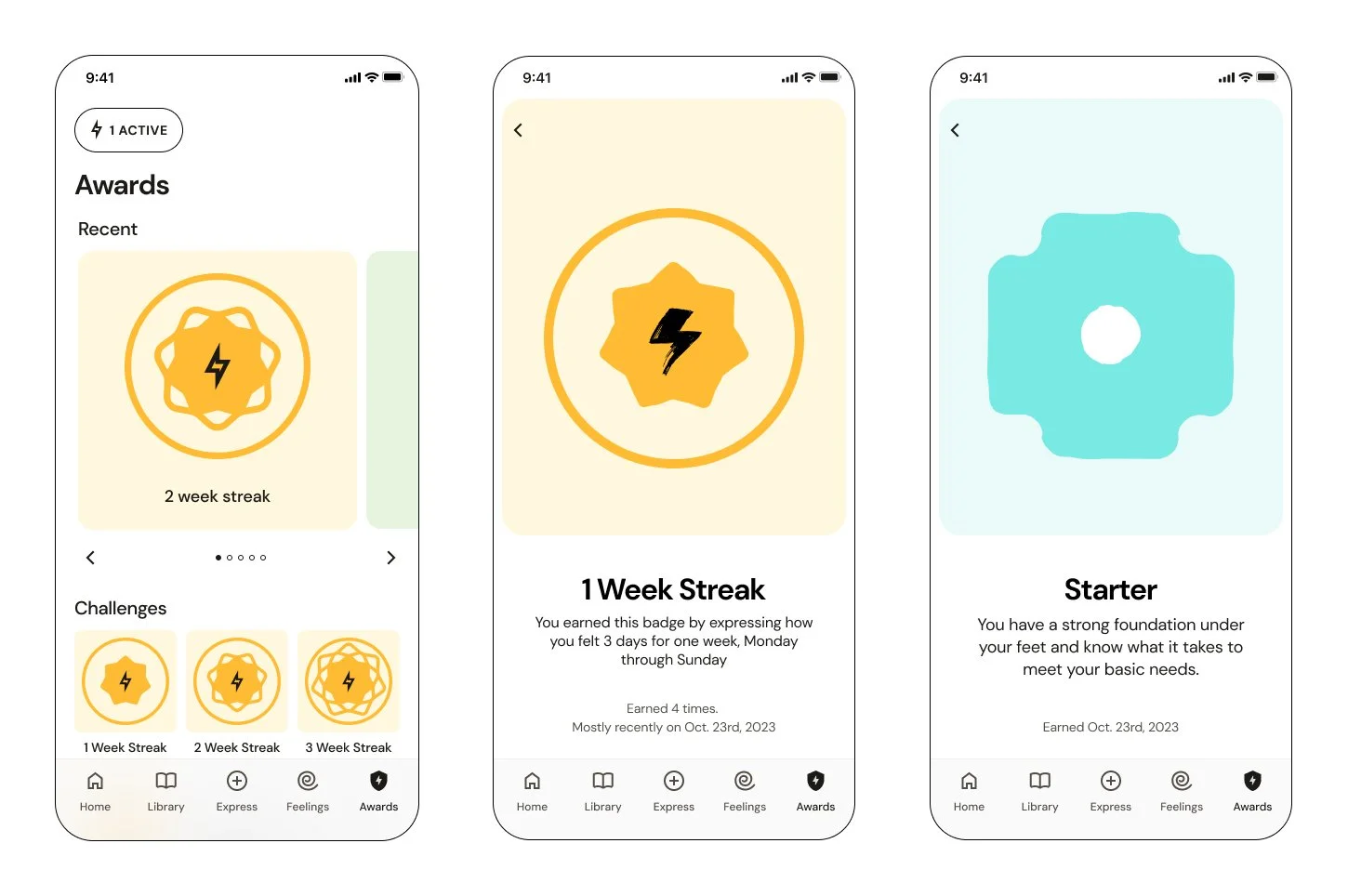
This reward framework encourages you to both engage with the feelings sharing aspect of Scout and the content in the app.
Rewards are earned based on how long your maximum consecutive streak of sharing feelings is, or by completing milestones in the Scout lessons activities.
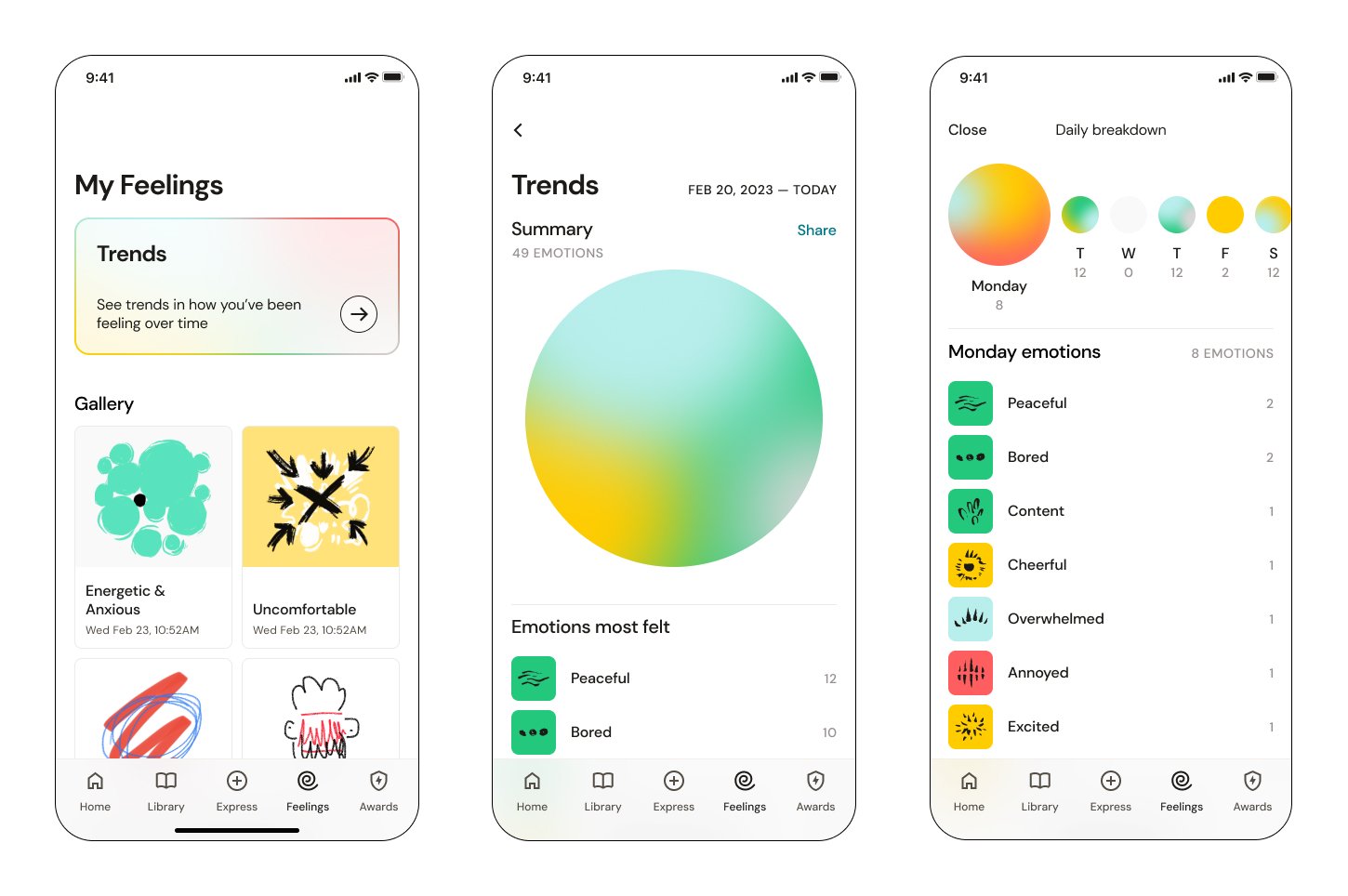
To give you transparency into how using Scout is impacting your mental health, the feelings trend dashboard breaks down the feelings data you’ve shared.
You can see all the ways you’ve expressed yourself based on the feeling you expressed, the feelings you’ve shared the most often, or look at a weekly and daily breakdown of the feelings you express.
This offers insight into overall trends over time, or if there are specific days or times when you’re often feeling particularly high or low so you know what to plan for.
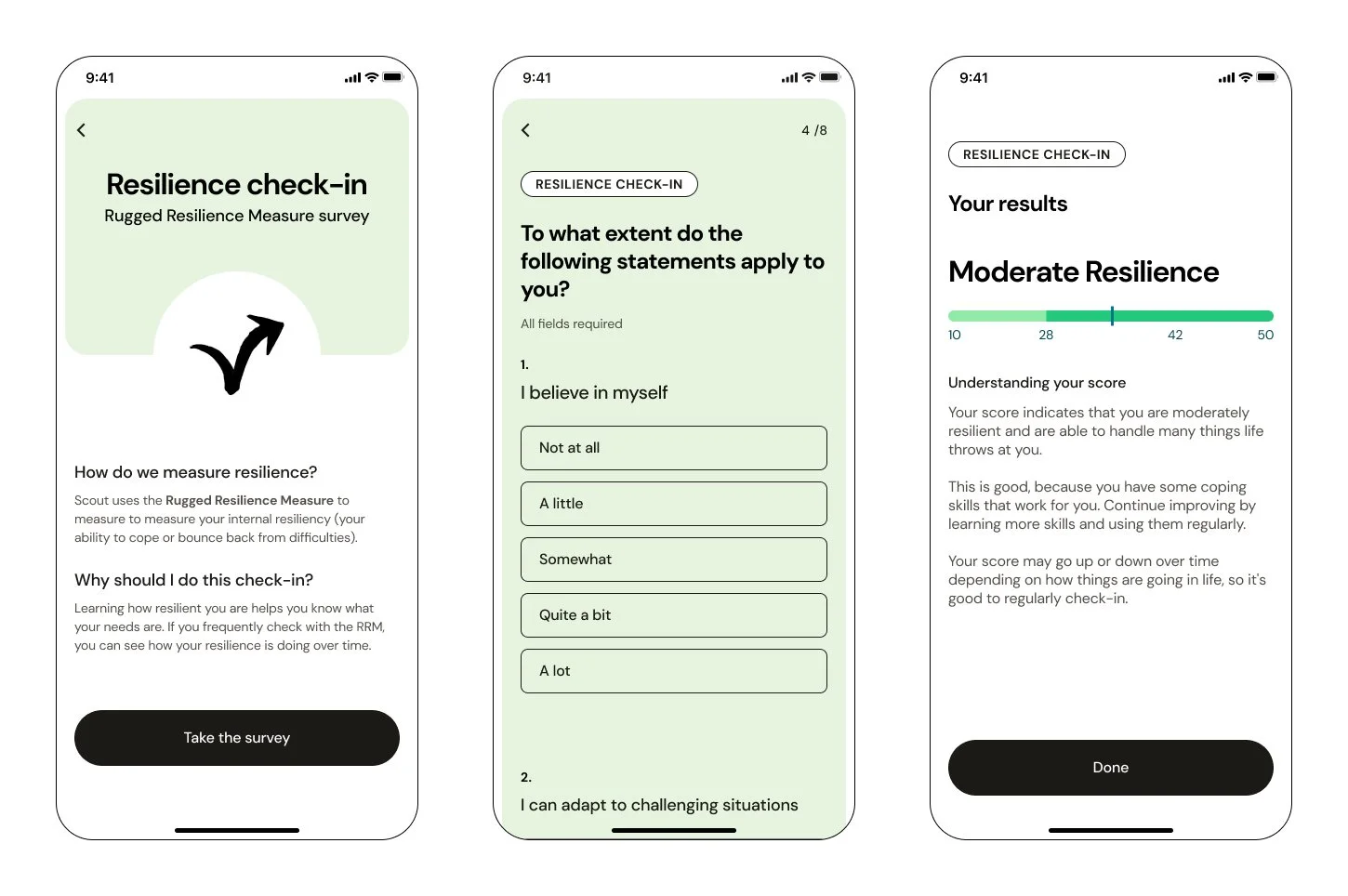
Periodically you are reminded to take one of three standardized surveys to see how you are doing from a clinical perspective. These aren’t meant to replace a clinician, but to gauge progress and offer resources.
Rugged Resilience Measure (RRM) measures how emotionally resilient and able to deal with adversity someone is. It indicates areas of life where someone is especially resilient or especially vulnerable.
Patient Health Questionnaire-9 (PHQ-9) assesses the level of depression someone is experiencing. It frames questions in terms of how often someone feels depression symptoms over the past two weeks.
Generalized Anxiety Disorder-7 (GAD-7) measures the general level of anxiety someone is feeling on a regular basis.
Depending on your responses, Scout would suggest you seek out mental health resources or the help of a clinician, in the event you are in a crisis.
Across California and beyond, young adults and parents downloaded and used Scout for their personal mental health or to understand the kinds of challenges their children might be going through.
Universities and high schools also eagerly adopted Scout as part of their mental health services to students.
In 2024, Scout won a Webby Award in the category of Health, Wellness & Fitness Apps and Software.